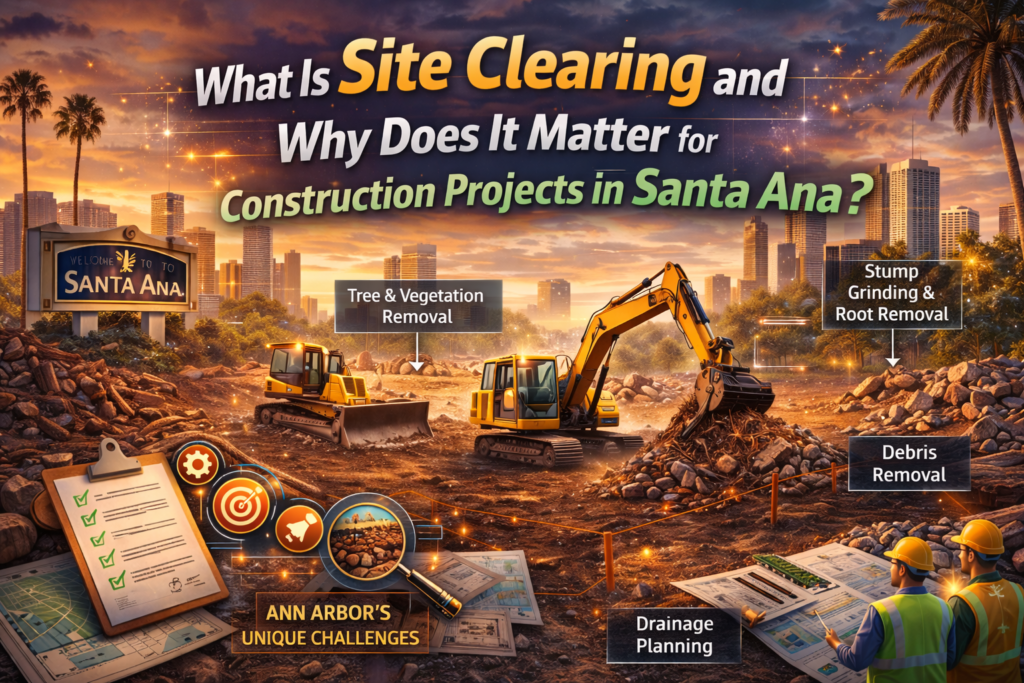
Whether you’re breaking ground on a new commercial building, preparing land for a paving project, or redeveloping an older lot, one thing always comes first: site clearing. It’s one of those steps that often gets overlooked in the early excitement of a new project, yet it quietly determines how smoothly everything else goes. This article breaks down what site clearing actually involves, why it matters in a place like Santa Ana, and what property owners and developers should understand before any work begins.
What Is Site Clearing, Exactly?
Site clearing is the process of removing everything from a parcel of land that would interfere with construction vegetation, trees, stumps, roots, rocks, old structures, debris, and even the unstable top layer of soil. It’s the foundational first step before any grading, excavation, paving, or building can take place.
It might sound simple, but professional site clearing is a multi-stage process that requires assessment, planning, the right equipment, and proper debris disposal. Skip any of these steps and you’re likely looking at structural problems, drainage failures, or regulatory headaches down the road.
Why Site Clearing Comes Before Everything Else
Construction can’t happen on unprepared land. Even a lot that looks relatively clean from the surface can hide problems underground old utility lines, root systems, clay pockets, or unstable fill material. A cleared and properly assessed site gives construction teams a safe, level, and stable base to work from.
There’s also a safety dimension. Overgrown vegetation, uneven ground, hidden debris, and old buried materials are genuine hazards for workers and equipment. Clearing the site eliminates those risks before any heavy machinery or crews start doing the more complex phases of work.
Beyond safety, most municipalities including Santa Ana won’t authorize construction to begin until a site has been properly prepared and inspected. Grading permits, for example, require a Public Works inspector to clear the initial grading work before building inspections can proceed.
The Core Stages of a Site Clearing Project
1. Site Assessment and Planning
Before a single machine touches the ground, a thorough assessment of the property is needed. This involves evaluating soil type, identifying underground utilities, checking drainage patterns, noting any environmental constraints, and determining what kind of clearing work the project actually requires.
In Santa Ana and wider Orange County, properties can vary significantly in their soil conditions. Areas closer to the Santa Ana River basin may have different drainage characteristics than inland or elevated properties. Clay-heavy soils, hardpan layers, and caliche deposits common in parts of Southern California require specific clearing and grading techniques that a generic approach won’t account for.
2. Vegetation and Undergrowth Removal
Clearing vegetation is typically the first active stage of the process. Work starts with undergrowth brush, weeds, and low-lying plants because removing it creates safer and more accessible space for the heavier work to follow.
Once the undergrowth is cleared, larger vegetation like trees and shrubs is addressed. Tree removal in a construction context is more involved than simple trimming: trees are typically cut to leave manageable stumps, which are then removed mechanically, followed by root extraction. This last step matters more than many people realize decaying root systems left in the ground can cause cracking and settling in concrete foundations and paved surfaces over time.
3. Stump Grinding and Root Removal
Stumps left in the soil will eventually decompose, but decomposing wood creates voids and instability in the ground. This is particularly problematic beneath concrete slabs, asphalt paving, or building foundations. Stump grinders mechanically break stumps down to below grade level, and roots are extracted to a depth that ensures they won’t cause future movement or cracking in anything built above them.
4. Removal of Hard Materials and Old Structures
Many older lots especially in developed urban areas like Santa Ana contain remnants of previous construction. Old concrete pads, foundation sections, buried pipes, obsolete drainage infrastructure, or asphalt from prior paving work may be present even when they’re not visible from the surface.
All of this material has to be identified, excavated, and removed. This is where a site clearing crew’s experience with local properties becomes genuinely useful knowing what’s likely to be under the surface of a particular lot based on its history and location speeds up the process and reduces surprises.
5. Debris Hauling and Proper Disposal
In Orange County, construction and demolition waste is subject to diversion requirements. Projects must recycle, reuse, or divert a significant minimum percentage of nonhazardous construction waste and that includes vegetation, soil, rocks, stumps, and debris from land clearing. This means responsible site clearing isn’t just about hauling material off a site, but ensuring it goes to the right facilities with appropriate documentation.
6. Grading and Surface Preparation
Once the land is cleared of all obstructions, grading work begins. This involves shaping the surface of the land leveling it, creating appropriate slopes for drainage, and compacting the soil to the density needed for whatever comes next. Surface soil (topsoil) often needs to be removed because its high concentration of organic material and root matter makes it unsuitable as a building foundation. The lower, more stable soil layers are graded to form a dependable base.
Proper drainage grading is especially important in Southern California’s climate. While the region sees relatively little rainfall overall, when storms do arrive, water runoff needs to be managed carefully to prevent erosion and flooding on and around the site.
Equipment Used in Site Clearing
The machinery involved in site clearing varies based on the size and nature of the project. Common equipment includes:
Excavators Versatile machines used for removing large volumes of debris, digging out stumps and roots, breaking up old concrete or asphalt, and moving material across the site.
Bulldozers Used to push debris away from cleared areas while simultaneously leveling the ground in preparation for grading.
Skid Steer Loaders Compact and highly maneuverable, these are valuable in tight spaces, around existing structures, or in smaller urban lots. They can be fitted with various attachments including buckets, grapples, and mulching heads.
Stump Grinders Purpose-built for grinding stumps down below the surface level, preventing future decomposition-related settling.
Mulchers Used for shredding brushwood and small trees in place, which can reduce hauling volume and, in some applications, be used as mulch elsewhere.
Dump Trucks Essential for transporting cleared material off-site to appropriate disposal or recycling facilities.
The right combination of equipment depends on the specific conditions of each site. A compact urban lot in a dense part of Santa Ana calls for different machinery than an open suburban parcel.
Site Clearing and Local Regulations in Santa Ana
Santa Ana, as part of both the City’s building authority and Orange County’s permitting framework, has specific requirements that affect site clearing projects:
Grading Permits: Any grading work associated with a construction project typically requires a grading permit. The City of Santa Ana requires a Public Works inspector to clear initial grading before building construction inspections can begin. Grading plans must be submitted for review and approved before work commences.
Construction & Demolition (C&D) Waste Diversion: Under Orange County regulations, construction and demolition projects must divert a minimum percentage of nonhazardous waste including materials from land clearing away from landfill disposal through recycling or reuse. This applies to trees, stumps, vegetation, rocks, and soil, in addition to conventional construction debris.
Water Quality Compliance: The Santa Ana Regional Water Quality Control Board oversees activities that could affect groundwater or surface water. Site clearing that disturbs soil particularly on larger parcels can trigger stormwater and erosion control requirements. Projects disturbing one acre or more of land may require a Construction General Permit from the State Water Resources Control Board, along with erosion control and stormwater management measures.
Environmental Review: Certain projects in areas with biological sensitivity or proximity to waterways may require environmental assessment before site clearing begins, including review of potential impacts on native vegetation or wildlife habitat.
Working with a contractor who understands these local requirements from experience not just in theory is one of the most practical advantages a property owner can have.
How Site Clearing Connects to What Comes After
Site clearing doesn’t exist in isolation. It’s the first phase in a sequence of preparation work, and its quality directly influences every phase that follows.
Excavation is the next step after clearing for most construction projects. Once the surface is free of obstructions, excavators can dig foundations, trenches for utilities, and any below-grade features. If tree roots or buried debris weren’t fully removed during clearing, they become obstacles during excavation.
Paving whether asphalt or concrete requires a stable, well-graded subbase. A site that wasn’t properly cleared and graded will produce a paved surface that cracks, settles unevenly, or develops drainage problems. For parking lots, driveways, and commercial surfaces in Santa Ana, this kind of premature failure is both expensive and disruptive.
Foundation work for buildings is entirely dependent on consistent, stable soil. Voids left by decomposing roots or organic debris can cause differential settling in a foundation over time, which leads to structural cracking and costly repairs.
Drainage systems designed into a site rely on the grading and surface preparation established during and after clearing. Poor grading means water pools where it shouldn’t, which in turn affects everything from pavement longevity to building moisture management.
Common Questions People Have About Site Clearing
How long does site clearing take?
Duration varies significantly by site size and complexity. A typical residential lot in Santa Ana might be cleared in one to three days. Commercial properties, or those with extensive old hardscape, buried debris, or significant vegetation, can take considerably longer sometimes a week or more.
Does every construction project require full site clearing?
Not always. Some sites are already largely clear and only need minor surface preparation or grading. Others require comprehensive clearing including vegetation removal, old structure demolition, and debris hauling. The site assessment phase determines exactly what’s needed.
What happens to the material that’s cleared?
Responsible contractors sort cleared material for appropriate handling. Concrete and asphalt can often be recycled. Clean soil may be reused on-site or transported elsewhere. Vegetation and woody debris may be mulched, composted, or taken to approved facilities. Under Orange County’s waste diversion requirements, documentation of proper disposal is required.
Can tree removal during site clearing harm neighboring properties?
When done professionally, no. Proper technique ensures that tree removal doesn’t cause root damage or soil disturbance that would affect adjacent properties. However, proximity to property lines and the presence of large trees near boundaries should be identified in the site assessment and addressed in the clearing plan.
What’s the difference between clearing and grubbing?
These terms are often used together. “Clearing” refers to the removal of all surface vegetation trees, brush, undergrowth. “Grubbing” specifically refers to the removal of roots and root systems from the soil after surface vegetation has been cleared. Both are typically part of a complete site clearing scope.
Why Local Knowledge Makes a Difference in Santa Ana
Santa Ana is a densely developed city with a mix of residential neighborhoods, commercial corridors, and industrial zones. Properties across the city have varied histories some with multiple generations of development and redevelopment layered on top of each other. Underground conditions aren’t always documented, and older utility infrastructure may not appear on any current maps.
Soil conditions across Orange County also vary considerably depending on proximity to the Santa Ana River, elevation, and prior land use. Clay soils that expand and contract with moisture changes are common in parts of the region, and hardpan layers can complicate both clearing and subsequent grading work.
For property owners in Santa Ana, the value of working with contractors who have hands-on familiarity with these local conditions and with the city’s permitting and inspection processes is practical and measurable. Local experience means fewer surprises, better project timelines, and clearing work that’s done right the first time.
If you’re planning a development, paving project, or construction job in Santa Ana and need to understand what site preparation involves for your specific property, Site Clearing Santa Ana provides professional assessment and clearing services with decades of experience across Orange County.